Appel à « embarquer » – Expédition SPARC 505S: ENIGMA: ExploratioN Into a Global early Miocene Anomaly 🗓️2026-01-23
Une campagne « à terre » pour revisiter des échantillons du Miocène collectés dans les Caraïbes et l’Atlantique Nord lors des précédentes campagnes de forage océaniques. Ce projet SPARC durera trois ans, avec un échantillonnage à Brème fin 2026 ou début 2027.
| Wébinaire explicatif | 4 décembre 2025 (lien vers l’enregistrement) |
| Date limite de l’expression d’intérêt | 23 décembre 2025 |
| Date limite de candidature | 23 janvier 2026, 23h59 (heure GMT) |
L’expédition IODP³ 505S est une expédition SPARC (Scientific Projects using ocean drilling ARChives – campagne sans nouveau forage, utilisant des archives de forage océanique). La campagne se base sur l’échantillonnage et l’analyse d’anciennes carottes collectées lors de missions IODP, ODP et DSDP dans les Caraïbes et en Atlantique Nord. Elle se tiendra dans la carothèque de Brême (Bremen Core Repository), en Allemagne. Nous invitons les scientifiques ayant un intérêt et une expertise pertinents vis-à-vis des objectifs de l’expédition à postuler pour devenir membre de l’équipe scientifique de l’expédition IODP³. Cet appel est ouvert aux candidats basés dans les nations participant actuellement au programme IODP³. Toute personne en activité dans un laboratoire français peut donc poser sa candidature.
Contexte scientifique (en anglais)
Background and objectives
The early Miocene (23-17 Ma) is emerging as a potentially transformative time for marine ecosystems. A lack of sampling in the early Miocene, the relative stability in the genus-level richness of traditionally studied marine fossils (e.g., shallow water hard-shelled invertebrates), and no record of perturbations in traditional climate proxies have led to an assumption that the early Miocene was relatively uneventful climatically. Growing evidence suggests otherwise; recently published high-resolution marine microfossil, phylogenetic, and geochemical records have revealed that the early Miocene was a time of significant ecological upheaval that led to permanent changes in marine ecosystem structure and function at a scale not observed since the Cretaceous–Paleogene Mass Extinction. Though a clear environmental driver for these ecological changes is not yet known, the upheaval observed in marine biota coincides with an abrupt shift in foraminifera-bound nitrogen isotopes, signifying a change in ocean oxygenation or nutrient cycling. Together, these records suggest that the potentially rapid changes in biodiversity and marine community structure during the early Miocene were profound and may have laid the foundation for the ocean ecosystem structure observed from the later Miocene to present day.
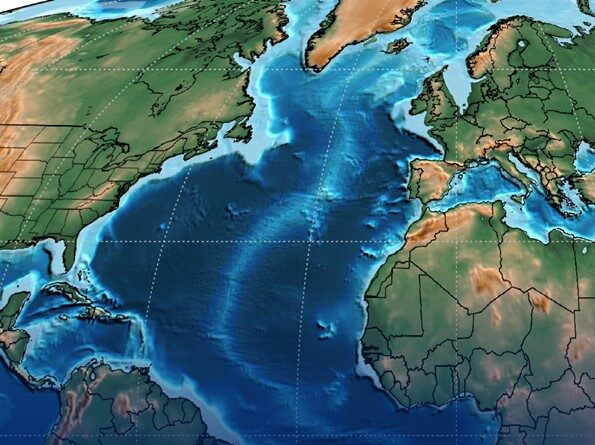
In this SPARC expedition, we will explore the biotic and environmental changes that occurred during this critical and understudied interval in Earth’s history. Spanning the breadth of the Atlantic Ocean and the Caribbean Sea, we will employ a multi- and interdisciplinary approach to refine age models, collect new geochemical proxy data, and perform Earth system climate model simulations to assess the basin-wide response across trophic levels to early Miocene ecosystem perturbations. ENIGMA aims for a spatiotemporally complete documentation of the ecological and environmental response of an entire ocean basin to disentangle this enigmatic Earth system change. We seek to test the hypothesis that paleoceanographic changes during the early Miocene altered primary productivity and nutrient export, the geochemical and micropaleontological signals of which will have been preserved in marine sediments.
The expedition will take a holistic approach, using multiple proxies on selected legacy deep sea sediment cores to reconstruct ancient biotic and abiotic change. We will address our hypothesis by investigating the following scientific objectives:
- Refine chronostratigraphic age models of all studied records to assess synchroneity of oceanographic and biotic changes during the early Miocene. Assessing whether early Miocene environmental changes occurred synchronously or not depends on the generation of accurate and precise age models for all sites, anchored by numerical ages. We therefore will take a uniform approach to refine age models for each of our target sites by refining shipboard chronostratigraphic protocols at a higher resolution and utilizing high precision radioisotopic geochronology wherever possible. We therefore seek applicants with expertise in age model development/reconciliation using bio-, chemo-, and magnetostratigraphy as well as geochronology.
- Generate and synthesize records of early Miocene environmental change in the Atlantic Ocean. We will use a suite of qualitative and quantitative geochemical and sedimentological proxies to assess climatic and environmental changes during the early Miocene. We therefore seek applicants with expertise in XRF data collection, processing,
and interpretation, and in a wide suite of geochemical analyses covering temperature, CO2, productivity, oxygenation, and surface to deep water mass properties. - Generate records of early Miocene biotic change. Fossil assemblage data collected from ENIGMA from all present microfossil groups throughout the Atlantic Ocean and Caribbean Sea target sections will be supplemented by existing legacy publications and database compilations. We therefore seek applicants with experience and expertise in the collection of scientific ocean drilling micropaleontological data including planktonic and benthic foraminifera, calcareous nannoplankton, radiolaria, ichthyoliths, ostracods, and palynology. Shared sample splits will maximize the scientific outputs of sediment sampling and ecosystem reconstruction.
- Assess the collective response of marine organisms to environmental changes using ecologically motivated statistical and mechanistic models. With the collected environmental and ecosystem data, we will integrate ecological and evolutionary modelling alongside climate records to determine how the holistic marine ecosystem of the Atlantic Ocean and Caribbean Sea responded to early Miocene paleoenvironmental shifts. ENIGMA will benefit substantially from Science Team members with experience in ecosystem modelling and integrated microfossil analyses.
- Develop climate model simulations to investigate ocean evolution during the early Miocene and assess forcing factors. We welcome applicants who can collaborate to implement marine biogeochemistry-enabled Earth System Models to simulate the response of climate/ocean dynamics, as well as productivity and dissolved oxygen, to a variety of orbital and climate system forcings that could have influenced the biotic and abiotic changes documented around 19 Ma. We will refine or adapt the modelling framework during the course of the ENIGMA project as more data becomes available. Our simulations will help clarify our mechanistic understanding of early Miocene global ocean and biotic evolution.
| Through the investigation of these scientific objectives, we will provide training to the next generation of scientific ocean drilling scientists, while paying special attention to inclusion of scientists with identities historically excluded from STEM and shipboard activities. |
Timing and Operations
A detailed implementation plan for the expedition will be developed in discussion with all Science Team members invited to participate following evaluation of applications received. This approach means the overall expedition research effort will benefit not only from the individual contributions proposed by all Science Team members in their applications but also from collaborations developed between team members once staffing is complete.
Expedition 505S has €300,000 of core funding from IODP³. After selection, Science Team members will engage with the Co-Chief Scientists in developing a detailed budget plan for use of this funding, to ensure the most effective use of this investment and to maximise resulting scientific benefits.
Once the implementation and budget plans are finalised and approved by the IODP³ MSP Facility Board, a formal start date for the expedition will be agreed with the IODP³ Science Office and IODP³ Managing Agency. The funded period will last for three years from this date, with the bulk of the expedition research effort taking place in this period. Note that there will be no offshore operations.
We anticipate beginning the three-year timeline of IODP³ Expedition 505S in July 2026, with sampling at the Bremen and Gulf Coast Core Repositories likely occurring later in 2026 and early in 2027, respectively (pending availability of the Science Team and consultation with the repositories). The Co-proponents will support members of the Science Team who wish to develop external funding proposals for expedition-related research.
Expertise sought
While we welcome applicants from all relevant scientific backgrounds, we are particularly interested in recruiting expertise in the following areas: taxonomy/assemblage/biostratigraphy of diatoms, planktonic and benthic foraminifera, calcareous nannoplankton, radiolaria, ichthyoliths, ostracods, and marine/terrestrial palynology; XRF analyses; organic and inorganic geochemistry, including boron, litihium, and neodymium isotopic analysis, among other isotopic systems; sedimentology; age model development using magnetostratigraphy, cyclostratigraphy and astrochronology; Earth system modelling; stratigraphic correlation; tectonics, structural geology and/or geophysics; and science communication.
We invite applications by scientists with expertise in each of these fields, both for “Repository and Laboratory” and “Laboratory-only roles” (see below). We also welcome applications from researchers proposing complementary research projects that go beyond the stated research objectives or wishing to apply additional or novel techniques not listed above.
| For more information, please read the full call for participation The Scientific Prospectus can also be found on the Expedition 505S Expedition Page. |
Candidature
Les candidatures doivent être soumises au plus tard le vendredi 23 janvier 2026 à 23h59 GMT en utilisant le Gateway IODP³, accessible via la page « Apply to Participate » sur le site web d’IODP³. De plus amples informations sur les attendus des candidatures sont également disponibles dans le Guide du Candidat IODP³. Veuillez noter que les rôles des candidats pour cet appel sont « Repository and laboratory » (si vous souhaitez participer à la phase de dépôt central de l’expédition) et « Laboratory only » (si vous ne souhaitez pas travailler au Bremen Core Repository) – voir la section 4.1 du Guide du Candidat IODP³ pour plus d’informations.
Un webinaire a eu lieu le 4 décembre 2025 pour présenter à la communauté les détails de l’expédition 505S. L’enregistrement de ce webinaire est disponible sur ce lien.
Pour toute question concernant le processus de candidature, veuillez contacter applications@iodp3.org.